HOME
> MUSIC
> PETULA'S POLYDOR
YEARS
Unboxed:
The Definitive Guide to Petula's Polydor Studio Recordings
Between 1972 and 1975, Petula entered one of the most intriguing and least explored chapters of her recording career. Having stepped away from her long associations with Pye and Warner Bros., she found herself navigating a new landscape of labels, producers, and studios, from New York to London to Hollywood. The result was a remarkably rich catalogue: five albums (one is live, so we're not including it here), a run of singles, and a constellation of sessions that reveals Petula experimenting, adapting, and stretching her musical identity.
This period has often been overshadowed by the towering success of Petula's 1960s output, yet the Polydor / MGM / ABC Dunhill years contain some of her most beautifully crafted recordings. On these recordings, Petula delivers truly exceptional vocals, capturing her voice at its absolute peak. They also offer a fascinating glimpse into the realities of the early 70s music industry: shifting label priorities, cross Atlantic release strategies, and albums built from sessions spanning several years.
What follows is the first fully structured, studio-by-studio, album-by-album exploration of Petula's Polydor / MGM years, a map of the songs, the sessions, and the creative journey behind them.
NOW
(1972)
A
transatlantic fresh start

U.S. album
cover |

U.S. reverse album
cover |

U.K. album cover |

U.K. reverse album
cover |
Petula's
first post PYE project was shaped by two distinct sets of
sessions: an initial trio of recordings in New York, followed by a
prolific run at London's Trident Studios. Together, these
sessions formed the backbone of Now,
the only album from her Polydor era to receive a U.S. release.
Issued first in America on MGM in December 1972, the album
appeared in the UK three months later, in March 1973, with a
further seven releases internationally. The U.S. edition featured
a different sleeve from the UK issue, in Japan it was issued with
an OBI strip and the Australian edition spotlighted "Wedding
Song" on the album cover. The album was produced by Michael
Curb and Don Costa, with arrangements by Costa. When it comes to total playing time,
Now is the shortest of the four Polydor studio albums, clocking in at 37:06.
Of Petula's Polydor albums, Now enjoyed the broadest international distribution.
Album
track listing / writing / arrangement credits: Wedding Song (There Is Love)
(Stookey) / Solitaire (Sedaka / Cody) / Don't Hide Your Love (Sedaka
/ Greenfield) / Shelter (South) / Mother Of Us All (Whiting) / Baby I'm Yours
(Van McCoy / My Guy (Robinson) / Your Heart Is Free Just Like The Wind
(Chevallier / Shakespeare) / Nothing Succeeds Like Success (Hatch
/ Trent) / Song Without End (Clark) / It's A Musical World (Bricusse
/ Newley). All tracks produced by Michael Curb and Don Costa.
Arranged by Don Costa.
|
France
|

Germany
|

France
|

Spain
|
Singles connected to this release:
My Guy / Little Bit of Lovin' (Canada, France (issued on Vogue), Japan, Yugoslavia, U.S.)
Wedding Song / My Guy (Australia)
Wedding Song / Song Without End (Australia, Brazil, Canada, France, Germany, Lebanon, New Zealand, Philippines, Portugal, South Africa, Spain, The Netherlands, U.K., U.S.)
Bleu Blanc Rouge / Il Est Temps (Wedding Song) (Canada)

Above: Wedding Song (There Is Love) Lebanon, 1972, Psychedelic Splatter Vinyl
A striking and little-seen Middle Eastern pressing of "Wedding Song (There Is Love)", issued in Lebanon in 1972 and pressed on vivid psychedelic splatter vinyl. Regional variants from this period were often produced in small quantities, and surviving copies are very scarce, especially in this eye-catching colourway. This is a wonderful example of how international pressings can take on a life and aesthetic all their own. Side B of this Lebanese pressing features Petula's own composition "Song Without End", here misprinted as
"Sonk Without End" on the label, adding an extra layer of collectability to an already unusual release. This single represents one of the more unusual and visually striking items held within the Fan Archive Collection. Its combination of rare regional manufacture, psychedelic splatter vinyl presentation, and its misprint makes it an exceptional example of international Petula Clark discography variants.
The 1972 Now Recording Sessions:
New York - March 1972
Petula's first steps into the new era produced three polished pop recordings:
My Guy (Petula's recording reached No.70 on the Billboard Hot 100 and climbed to No.12 on the Billboard Adult Contemporary chart in 1972)
Mother of Us All
Little Bit of Lovin' (issued as a single in the US in May 1972 as the flip to My Guy)
Collectors
Note: My Guy / Little Bit of
Lovin’: Nothing definitive is documented for these two U.S. singles beyond fan research and the listings on 45Cat.
My Guy / Little Bit of Lovin’ was scheduled for release on Verve (VK 10671) in 1972, but instead appeared on MGM
(K-14392). The Verve issue either did not materialise or may have circulated only in very small promotional quantities; this cannot be verified and is included here solely as a collectors reference.
No confirmed copies have surfaced. Read
more>
Trident Studios, London - August 1972
Trident, home to Bowie, Elton John, and Queen, provided a sleek, contemporary and polished sound:
Song Without End (words and music by Petula)
Shelter
Wedding Song (There Is Love) (The 1972 Lebanese pressing appeared as a multi-coloured 7-inch single, shown above, which forms part of the Fan Archive Collection and in Australia, Petula's recording peaked at No.10 in the singles chart)
No Such Thing as a Miracle (laid down at this time but held back until 1975, when it surfaced on the album
I'm The Woman You Need)
It's a Musical World (from the Bricusse / Newley musical The Good Old, Bad Old Days)
Solitaire
Baby I'm Yours
Don't Hide Your Love
Your Heart Is Free Just Like the Wind
Nothing Succeeds Like Success (from the Hatch / Trent musical The Card)
These sessions gave
Now its identity: elegant, melodic, and unmistakably early 1970s. The album is Petula perfection in its purest form.
In the UK, the album received warm praise from the press. The Daily Mirror wrote: "Petula Clark has been singing to me ever since I was born. Yet she can still come up with something fresh and musically surprising.
Tenderness, humour, love, loneliness, drama, simplicity are all to be found in this carefully varied album."
The Coventry Evening Telegraph was equally enthusiastic, noting: "One says that Pet Clark can show many a modern singer how to put over a number it dates her and you too. The truth is she is rapidly becoming one of those apparently ageless, super-talented performers who can take almost any number and make it sound special. If you like her style you will like this one."
The review went on to highlight the breadth of the album: "All the way from the happy, shuffling 'Baby, I'm Yours' to the version of 'My Guy' she has made her own, Pet moves with ease. But perhaps her best showcase is the big production number 'It's a Musical World', when she rides along merrily over the orchestra and chorus, never sacrificing tone for mere volume."
|

1997 Chronicles CD release
|

Unauthorised Russian clone
|

The LP Collection, Vol. 5
|
|
The
only authorised CD edition appeared in 1997 (Polygram
Chronicles 3145390772, U.S.). and the album has never
received any form of digital release. In 2004, an unauthorised Russian clone of
Now appeared as part of a
12 album set on CD, a pressing that has since become a genuine rarity among collectors. Two decades later, in 2023, Classics France issued a pirate clone of the album on the CD release Petula Clark: The LP Collection, Volume 5.
Illicit
CD editions are not endorsed, and they are noted here solely for
the sake of collectors' reference.
Reflecting on the 1997 CD release, Record Collector wrote that 1972's
Now was "a powerful set, well produced by Mike Curb and Don Costa, featuring vocals that surpass her work for
PYE."
They went on to praise the album's standout moments: "‘Solitaire' is as sultry as she ever got, and her version of the soul standard ‘Baby I'm Yours' is surprisingly good."
The review also highlighted the album's lush arrangements, noting that the orchestrations were superb, and that
"Wedding Song" provided Petula with an enormous hit that has since become a firm fan
favourite.
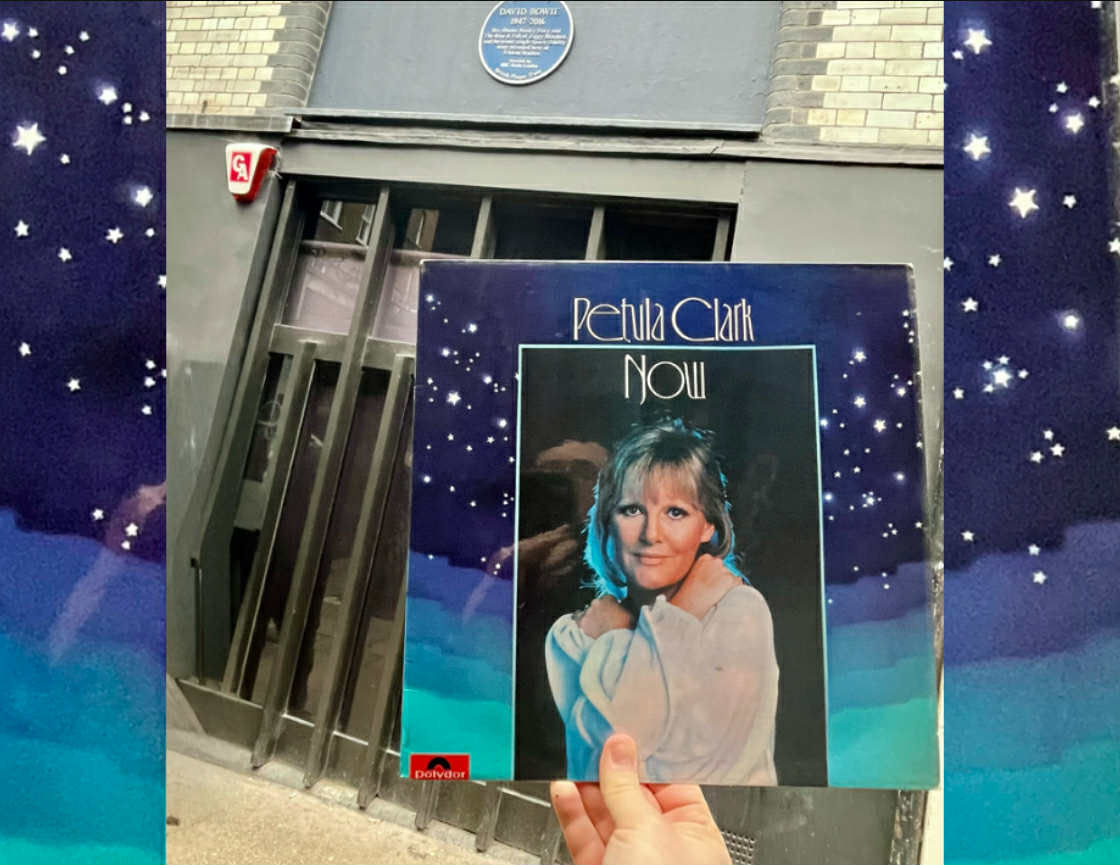
If
you ever find yourself in London, the studio where much of Now was
recorded sits at 17 St
Anne's Court in the heart of Soho, a perfect spot to stop by and
snap a photo with your copy of Now
for a great little collector's moment! Above: A brief
excursion from the Fan Archive shelves as we turned up at the
studio in Soho with our copy of Now.
The blue
plaque above the door commemorates the multiple David Bowie albums
made at this studio. Petula's Polydor sessions recorded here place her in
excellent company.
COME
ON HOME (1974)
A
cohesive West Coast album with a warm, Californian glow
|

U.K. album cover
|

U.K. reverse album
cover
|

Japanese album cover
|

Japanese reverse album
cover
|
Recorded in the US during early 1974,
Come On Home stands as the most unified album of Petula's Polydor years. The
Come On Home sessions produced a full album's worth of material in a remarkably short time. Plans for a U.S. release of
Come On Home were ultimately shelved, although "In The Old Fashioned Way" did appear stateside as an MGM single in March 1974, backed with the album's title track. The album itself finally emerged in the U.K. in May 1974, albeit with very little fanfare. Internationally,
Come On Home received wider circulation, with releases in Australia, Japan, and South Africa. The Japanese edition was especially notable, issued in a far more striking sleeve than its U.K. counterpart. Several songs from the album were later showcased by Petula in her 1974 BBC television series The Sound of Petula, giving the material a welcome platform despite the album's modest promotion. The title track, written by Petula herself, both words and music, anchors the album, which was produced by Toni Scotti and arranged variously by Tommy Oliver, John D'Andrea, Frank Owens, Peter Knight, and John Fiddy. With a running time of 40:15, it stands as one of the two fully conceived Polydor albums: a unified project rather than a collection of unrelated sessions. The title song went on to become one of the standout recordings of the era, later resurfacing as a U.K. B-side in 1989! The album's mix of pop influences is anchored throughout by Petula's unmistakable melodic touch, resulting in a work that stands out as both distinct and cohesive within her 1970s catalogue.
Album
track listing / writing / arrangement credits: The Gypsy
(Lightfoot) / I've Got To Learn To Live Without You (Norman) / In The Old Fashioned Way
(Garvarentz / Kasha / Hairschorn) / Till (Sigman / Danvers) / Killing Me Softly
(Gimbel / Fox) / Baby I'm A Want You - Everything I Own (Gates) / I Can See Clearly Now
(Nash) / Come On Home (Clark) / Half As Much (Williams) / Until It's Time For You To Go
(Buffy St. Marie) / Here Comes That Rainy Day Feeling - If You Could Read My Mind
(McCaualay / Cook / Greenaway) / Without You (Ham / Evans). All
tracks produced by Tony Scotti. Arranged by Tommy Oliver (1, 3, 4,
9, 11), John D'Andrea (2, 6, 7), Frank Owens (5, 8, 10), Peter
Knight and John Fiddy (12).
Singles connected to this release:
|
U.S.
|

Australia
|
|
|
The Old Fashioned Way / Come On Home (Australia, U.S.)
The Come On Home sessions:
Come On Home (words and music by Petula. Issued in the U.S. as the flip to In the Old Fashioned Way
Half As Much
Until It's Time for You to Go
Here Comes That Rainy Day Feeling / If You Could Read My Mind
Without You
The Gypsy
I've Got to Learn to Live Without You
The Old Fashioned Way (issued as a single in the U.S.)
Till
Killing Me Softly
Baby I'm a Want You - Everything I Own
Your Cheatin' Heart (laid down at this time but held back until 1975, when it surfaced on the album
I'm The Woman You Need)
Come On Home is a warm, intimate album that feels like a snapshot of Petula's artistry at a moment of quiet reinvention.
Across the regional press, Come On Home was greeted as one of Petula's most satisfying and mature albums of the period, with reviewers consistently highlighting both the quality of the material and the renewed depth in her vocal delivery.
The Hartlepool Northern Daily Mail was particularly struck by the album's musical strength, noting that even for listeners who had not always connected with Petula's earlier work, this collection "is something else." They singled out The Gypsy, I've Got to Learn to Live Without You, a "seductive" Killing Me Softly, and a "tremendous" I Can See Clearly Now, while calling Until It's Time for You to Go the standout of the entire set. Her own composition,
Come On Home, was praised for its sensitivity. While In the Old Fashioned Way and Till were seen as less successful, the reviewer emphasised that Clark's distinctive voice "still rates high despite the ups and downs of her career."
The Runcorn Weekly News offered a concise but positive notice, highlighting the album's title track, self-penned by Petula, and listing key inclusions such as In the Old Fashioned Way, Till, Killing Me Softly, Without You, and If You Could Read My Mind, presenting the LP as a strong, contemporary songbook.
The Huddersfield Daily Examiner delivered the most effusive review, describing Petula as an artist who brings "that indefinable something" to every song she chooses. They praised her insistence on selecting material that "reaches" her emotionally, and felt she "could not have done much better" than the repertoire assembled here. The reviewer admired the breadth of the album, from the gentle Till to the "tear-jerking" Killing Me Softly, the Bread medley, Johnny Nash's upbeat I Can See Clearly Now, and Buffy Sainte-Marie's Until It's Time for You to Go. They also applauded her ability to refresh pop standards with a quality that is "purely Petula Clark," calling the album "a lovely disc."
Finally, the Kent Evening Post praised the album as a rewarding return after more than a year without a new release, noting that Petula was in "truly fine form." They highlighted The Gypsy, I Can See Clearly Now, Killing Me Softly, Without You, and the Bread medley, and commended the arrangements by Tommy Oliver, John D'Andrea, Frank Owens, and Peter Knight as "all quality stuff."
1997 Chronicles CD release |
Unauthorised Russian clone |
The LP Collection, Vol. 5 |
|
The only officially sanctioned CD release of
Come On Home appeared in 1997 (Polygram Chronicles 314 539 078-2, U.S.). This edition reproduces the original album artwork, although the reduced scale leaves much of it barely legible, and it includes a short set of liner notes by John W. Russo. The album has still never been issued in any legitimate digital format.
An unauthorised Russian CD clone emerged in 2004 as part of a 12-album set, a pressing that has since become a genuine rarity among collectors. Nearly two decades later, in 2023, Classics France issued another illicit reproduction on the CD compilation Petula Clark: The LP Collection, Volume 5.
Illicit CD editions are not endorsed, and they are noted here solely for the sake of collectors' reference.
When Record Collector revisited Come On Home for its 1997 CD debut, the monthly magazine offered a measured but appreciative assessment. They noted that the 1974 LP contains several genuinely strong moments, particularly Petula's own title track and her sensitive interpretation of Gordon Lightfoot's The Gypsy. At the same time, they felt the album was less ambitious than its predecessor
Now, and that it inevitably suffered in comparison. The review also pointed to the involvement of producer Tony Scotti, whose later work with Petula in the 1980s would return her to the U.S. charts on his own label.
I'M
THE WOMAN YOU NEED (1975)
A
patchwork album built from three years of Hollywood and London sessions
|

U.K. album cover
|

U.K. reverse album
cover
|
|
|
By the early 1970s, Petula was navigating a recording landscape that was shifting beneath her feet. The era of tightly coordinated international releases, the kind that had powered her global success in the 1960s, was giving way to a more fragmented industry, with different labels handling different territories and often pursuing their own priorities. Between MGM in the United States, ABC Dunhill in North America, and Polydor in the U.K. and Australia, the lines of communication with a joined up approach were beginning to fray.
Against this backdrop, the material that would eventually form I'm The Woman You Need was recorded across a series of sessions between 1972 and 1974. These weren't conceived as parts of a single album; they were individual projects, experiments, and one-off singles, each shaped by the needs of a particular market at a particular moment. Yet when heard together, they reveal a remarkably consistent artistic voice, Petula's versatility, her command of contemporary styles, and the clarity of her vocal work during this period.
The trouble began when the labels started issuing singles without a unified plan. In 1973, MGM prepared Brand New Day backed with No Such Thing As a Miracle for a U.S. release, even assigning it a catalogue number, before abruptly withdrawing it. That same year, I Can't Remember (How It Was Before) appeared twice on MGM in the U.S., first as a B-side, then re-emerging as an A-side, while Polydor issued it separately in Australia. Instead of building momentum, the song became a kind of wandering orphan, appearing in different guises with no clear strategy behind it.
By 1974, the situation had grown even more confused. ABC Dunhill released Never Been a Horse That Couldn't Be Rode backed with
I'm The Woman You Need in the U.S. and Canada, only for I'm The Woman You Need
to reappear shortly afterwards as the B-side to Loving Arms in the same territories. Polydor then issued
I'm The Woman You Need yet again as the B-side to Let's Sing a Love Song in the U.K. and Australia. Three labels, three territories, three different release patterns, all within a short span of time.
What emerged was not a coordinated campaign but a patchwork of disconnected decisions. Songs were issued, reissued, and repackaged with little sense of how they related to one another. By the time I'm The Woman You Need finally reached U.K. shops on 4 April 1975, three of its tracks had already been circulating for up to two years across multiple countries and labels. The album arrived not as a major new statement but as the quiet conclusion to a period of administrative drift.
And yet, when heard today, the album transcends the confusion that surrounded its release. Petula's performances are uniformly strong, poised, expressive, and technically impeccable. The title track, written entirely by Petula herself, stands as one of the most personal pieces of the era. Even the artwork carries significance: the cover photograph, taken by Lord Snowdon, comes from a session that produced several unpublished variants.
In retrospect, the album feels like a document of Petula working at full strength while the machinery around her struggled to keep pace. The industry may have lost its way, but Petula certainly hadn't. For all its tangled history, I'm The Woman You Need has become something of a cherished favourite within Team Fan Archive and the wider fan community. Among the Polydor albums, it stands out not only for the strength of the material but for the sheer artistry of its presentation, even the typography of Petula's name on the cover is intricate, elegant, and unexpectedly brilliant. The level of detail is astonishing, and it perfectly crowns an album that deserves far more recognition than it ever received. Here's that intricate design by Steve Ridgeway ultilised on the front and back cover of the album:

Album
track listing / writing / arrangement credits: Brand New Day
(Hammond / Hazlewood) / And You Love Me (Osmond) / No Such Thing As A Miracle
(Bickerton / Waddington) / Loving Arms (Jans) / Your Cheatin' Heart
(Williams) / I'm The Woman You Need (Clark) / To Give (Crewe /
Gaudio) / I Can't Remember (Crewe) / Will My Love Be You
(Calderon) / Every Step Of The Way (Hammond / Hazelwood) / You Don't Need Me
(Huddleston) / Never Been A Horse (Holler / Holler). Produced by
Albert Hammond (1,10), Wayne Osmond (2), Wayne Bicketon and Tony
Waddinton (3), Phil Gemhardt and Tony Scotti (4), Tony Scotti (5,
6, 9, 11, 12), Tony Scotti and Bob Crewe (7), Bob Crewe (8).
A Brief Summary of the Muddled Single Releases (1973-1974)
The release history surrounding I'm The Woman You Need is unusually tangled, reflecting a period when the relationships between MGM, ABC Dunhill, and Polydor seemed to drift off course. Instead of a coordinated strategy, the singles emerged in overlapping, sometimes contradictory ways across different territories and labels. Here's our brief summary of the singles:
1973 - U.S. (MGM)
Brand New Day backed with No Such Thing As a Miracle was prepared as a single and assigned a catalogue number, but ultimately withdrawn before release.
1973 - U.S. (MGM)
I Can't Remember (How It Was Before) first appeared as the B-side to Gratification.
1973 - U.S. & Australia (MGM / Polydor)
The same track, I Can't Remember (How It Was Before), was then issued again, this time on MGM as the A-side to Serenade of Love in the U.S., and on Polydor in Australia.
1974 - U.S. & Canada (ABC Dunhill)
Never Been a Horse That Couldn't Be Rode backed with I'm The Woman You Need appeared as a two-sider on ABC Dunhill.
1974 - U.S. & Canada (ABC Dunhill)
I'm The Woman You Need resurfaced a few months later as the B-side to Loving Arms.
1974 - U.K. & Australia (Polydor)
The same track appeared yet again as the B-side to Let's Sing a Love Song (presumably issued as this was Petula's opening song on her 1974 BBC TV series The Sound of Petula).
Collectors
Note: Brand New Day / Every Step of the Way was scheduled for release in the U.S. on MGM (K-14534) in 1973. No confirmed copies have surfaced, and no primary documentation has been located; the information is preserved here solely as a collectors reference based on fan research and the 45Cat listing.
Read
more>
Trident Studios, London - August 1972
No Such Thing as a Miracle (appears on side-a, track 3)
MGM Recording Studios, Hollywood - January 1973
I Can't Remember (appears on side-b, track 2)
Serenade of Love (first issued as a single in February 1973)
Western Recording Studios, Hollywood - February 1973
Every Step of the Way (appears on side-a, track 4)
The Sound Factory, Hollywood - May 1973
Gratifaction (first issued as a single in 1973)
Can't Take My Eyes Off You (remained unreleased until 2001)
MGM Recording Studios, Hollywood - August 1973
Silver Spoon (first issued as a single 1973)
Fixing to Live (first issued as a single 1973)
To Give (appears on side-b, track 1)
You Don't Need Me (appears on side-b, track 5)
Westwood Studios, Hollywood - October 1973
And You Love Me (appears on side-a, track 2)
From the Come On Home sessions
Your Cheatin' Heart (laid down as part of the Come On Home sessions but held back from release until
I'm The Woman You Need) (appears on side-a, track 5)
Sound Labs Incorporated, Hollywood - April 1974
I'm the Woman You Need (appears on side-a, track 6)
Let's Sing a Love Song (issued as a single in October 1974)
Eres Tu (Will My Love Be You) (appears on side-b, track 3)
C'est Ça Ma Chanson (held back from release until Just Petula)
Never Been a Horse That Couldn't Be Rode (appears on side-b, track 6)
Despite receiving almost no fanfare on release,
I'm The Woman You Need was warmly received by those who heard it. Contemporary reviewers noted that Petula delivered
"another winner," praising the impeccable quality of her voice and the album's quietly confident production. It was acknowledged that the record rewards repeated listening, gradually revealing its strengths rather than relying on instant impact. The second side drew particular admiration, with tracks such as
"To Give" and "Every Step of the Way" highlighted for their emotional pull. Reviewers also singled out the album's opener,
"Brand New Day," where Petula's understated delivery blends beautifully with the colourful orchestration. The overall verdict was that her fans would welcome this thoughtful, well-crafted collection, a solid, satisfying album that deserved more attention than it received at the time.
1997 Chronicles CD release |
Unauthorised Russian clone |
The LP Collection, Vol. 5 |
|
The only officially sanctioned CD release of
I'm The Woman You Need appeared in 1997 (Polygram Chronicles 314 539 080-2, U.S.). This edition faithfully reproduces the original album artwork, though the reduced scale renders much of the text barely legible, and it includes a brief set of liner notes by John W. Russo. Despite this release, the album has never been issued in any legitimate digital format.
In 2004, an unauthorised Russian CD clone surfaced as part of a 12-album set. Although illicit, that pressing has since become a genuine rarity among collectors due to its limited circulation. Nearly twenty years later, in 2023, Classics France issued another unlicensed reproduction within the compilation Petula Clark: The LP Collection, Volume 5. These editions are not endorsed, and they are noted here solely for reference within the historical record of the album's availability.
When Record Collector revisited the album in 1997, it singled out I'm The Woman You Need as "the best of the bunch… in fact, it's sublime." The review praised the way the varied producers, Albert Hammond, Gaudio-Crewe, Wayne Osmond and others, manage to create a cohesive whole, and highlighted several of Petula's finest vocal performances. Her range on "Every Step of the Way" and "To Give" was described as "just incredible," underscoring the album's reputation among enthusiasts as one of the standout achievements of her mid-1970s output.
JUST
PETULA (1975)
A
hybrid release: part reissue, part refresh
|

U.K. album cover
|

U.K. reverse album
cover
|
|
|
Just Petula draws heavily from the
Now sessions while incorporating later Hollywood recordings and single-only tracks. It serves as a curated retrospective of her early-70s work, reshaped for a mid-70s audience.
First released in August 1975,
Just Petula brought together eleven tracks recorded between 1972 and 1974 across London, New York, and Hollywood. The album showcases Petula's trademark warmth, clarity, and polish,
yet its construction has long intrigued collectors. Seven of its selections had already appeared on her
1973 album Now, prompting later listeners to wonder why fresher material wasn't given greater prominence. With a wealth of strong, contemporary recordings available at the time,
including several U.S. only singles, the potential for a more
forward-looking collection was unmistakable.
Even so, Just Petula remains a notable entry in her discography, not least because it effectively closed her Polydor era. Its blend of recycled favourites and overlooked gems offers a snapshot of a transitional moment, capturing both the breadth of material she had amassed and the label's shifting priorities.
Track Details: Recording Locations, Years & Notes
-
Wedding Song (There Is Love)
- London, 1972 (previously issued on Now)
-
Silver Spoon
- Hollywood, 1973 (issued in the U.S. as a single; first U.K. LP appearance here)
(Pulver) Produced by Tony Scotti and Phil Gernhard
-
Solitaire
- London, 1972 (previously issued on Now)
-
C'est
Ça, Ma Chanson
- Hollywood, 1974 (Bickerton / Waddington) Produced by Tony
Scotti
-
Mother of Us All
- New York, 1972 (previously issued on Now)
-
Baby
I'm Yours - London, 1972 (previously issued on Now)
-
Let's Sing a Love Song
- Hollywood, 1974 (opening/closing theme for The Sound of Petula; issued as a U.K. single in October 1974)
(Lobo) Produced by Tony Scotti and Phil Gernhard
-
It's a Musical World
- London, 1972 (previously issued on Now)
-
Fixing to Live
- Hollywood, 1973 (issued in the U.S. as a single; first U.K. LP appearance here)
(Pulver)
-
My Guy
- New York, 1972 (previously issued on Now)
-
Song Without End
- London, 1972 (previously issued on Now)
From a collector's standpoint,
Just Petula is a curious hybrid: four genuinely superb tracks making their
LP debut, surrounded by a majority of earlier material that inevitably softens the album's impact. With at least seven strong alternatives available at the time:
"Serenade of Love," "Little Bit of
Lovin'," "Didn't I Say I Love You," "Super Loving Lady," "Gratification,"
"Can't Take My Eyes Off You," and "Walking on Air", the possibility of a fresher, more cohesive set was tantalisingly within reach.
The new to album track highlights on Just Petula shine
brightly though, and its place as the final chapter of Petula's Polydor years gives it a significance that extends beyond its
track-list.
Contemporary
press coverage expressed admiration for Petula's continued
ability to deliver "top-class music," noting that her latest
Polydor release carried a bright, upbeat sound. Reviewers
highlighted how well the relaxed orchestral backing complemented
songs such as "Solitaire." There was also appreciation for the
gentle nostalgia of "It's a Musical World," while the
standout for many critics was "Song Without End," praised as
the romantic, mellow gem of the collection, further proof, they
felt, of Petula's enduring versatility.
|

1997 Chronicles CD release
|
Unauthorised Russian clone
|
|
|
The only officially sanctioned CD edition of
Just Petula was released in 1997 by Polygram Chronicles (314 539 081-2, U.S.). It reproduces the original album artwork against a stark white background and it includes a short set of liner notes by John W. Russo. Despite this issue, the album has never appeared in any legitimate digital format.
In 2004, an unauthorised Russian CD clone emerged as part of a 12-album set. Although illicit, that pressing has since become a genuine rarity among collectors due to its limited distribution.
The
Single Only Tracks: essential
pieces of the MGM / ABC
Dunhill / Polydor puzzle
For collectors, several key recordings from this era never appeared on any of Petula's Polydor albums. Issued only as standalone singles, they form an important part of the complete
MGM / ABC Dunhill / Polydor-period picture:
-
Little Bit of
Lovin' (1972) - issued in the U.S. on MGM in May 1972
-
Gratification (1973) - issued in the U.S. on MGM in 1972
-
Serenade of Love (1973) - issued in the U.S. on MGM in 1973
-
Loving Arms (1974) - issued in the U.S. on ABC Dunhill in May 1974
-
Let's Sing a Love Song (1974) - issued in the U.K. on
Polydor; used as the opening theme for Petula's BBC TV series The Sound of Petula
-
Loving Arms (1974) - issued in the U.S. on ABC Dunhill in May 1974
-
Lead Me On (with Sacha
Distel) - originally released in the U.K. on 26 October 1973; later included on the 2007 Varese Sarabande CD Duets, the only authorised CD appearance
-
Taking It On (with Sacha
Distel) - released by Polydor U.K. on 26 October 1973
-
I Am Your Song (1975) - a Tony Hatch & Jackie Trent composition issued on 4 April 1975, the same day I'm the Woman You Need was released in the U.K.
The Birmingham Mail
noted in its record-review column that I
Am Your Song was "a lovely song from a delightful
singer," adding that while it was a personal favourite, its
commercial prospects were less certain.
-
Super Loving Lady (1975) -
music and lyrics by Petula, arranged and produced by Tony
Hatch; released on 4 April 1975 as the B-side to I Am Your Song
Together, these single-only titles represent significant gaps that any truly comprehensive reissue programme would need to address.
The
live legacy of the Polydor Years
By
our count, at least sixteen live recordings survive in which
Petula performed material from her Polydor catalogue, a striking
reminder of how firmly these songs sat at the heart of her
repertoire during the early-to-mid 1970s. Surviving live, non-mimed
television performances include To
Give, Fixing to Live, Silver
Spoon, Without You, The
Gypsy, Let’s Sing a Love
Song, It’s a Musical World,
Killing Me Softly, Baby
I’m a Want You / Everything I Own, Wedding
Song, and My Guy. All
originate from various broadcast sources and are now out of
copyright in the UK. For archival reference, Team Fan Archive has
produced a one-off CD bringing together these live performances
from their disparate broadcast sources, and the result makes for a
genuinely fascinating listen.
For collectors, these recordings are invaluable. They offer a rare chance to hear how Petula reshaped her Polydor material in front of an audience in a live setting,
often with new phrasing, subtle arrangement changes, and the unmistakable immediacy of a live performance. They also help fill a major gap in her catalogue: almost none of Petula's 1970s studio work is currently available in any official form. A
well-curated release of these live tracks would not only stand on its own merits, but would also provide
long-overdue access to a key part of her artistic output from this era.
Legally, these recordings can be issued in the U.K. because the copyright on the original broadcasts expired 50 years after the end of the calendar year in which they were first transmitted. Once that period ends, the performer
and rights holders no longer holds rights over the broadcast performance, and the material enters the public domain. The relevant guidance is set out clearly in the
U.K. Copyright, Designs and Patents Act 1988 under "Duration of copyright in broadcasts."
Further detail in the legislation can be found
here.
The unreleased material: A treasure trove waiting to be opened
Few fans realise just how much remains unheard from Petula's Polydor years. Across the four studio-based albums, there are:
outtakes
alternate takes
guide vocals
unused mixes
unreleased single sides
It's the kind of hidden archive that could easily form the basis of a definitive collector's box set. And if a physical edition isn't realistic or commercially viable, then the original albums, exactly as they were released, deserve to be properly remastered and issued across digital platforms, complete with digital booklets and session notes. The 1997 CD editions were warmly received at the time, and remain valuable simply because nothing else is commercially available, but they could benefit enormously from a fresh, sympathetic remaster.
Petula's Polydor catalogue is too rich, too varied, and too historically important to remain in the shadows.
The
cassette editions of Petula's UK Polydor studio albums
|
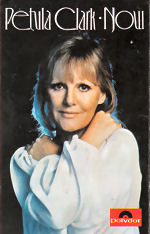
Now
|

Come On Home
|
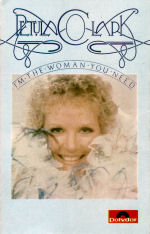
I'm The Woman You Need
|

Just Petula
|
Did You Know?
How Petula's Polydor Albums Change Shape Across LP and Cassette
Across the early-to-mid 1970s, Petula's Polydor albums were issued in both LP and cassette
formats including 8-track cartridges. Because cassette sides had to be balanced for running time, each album was
re-sequenced for tape. These weren't artistic revisions, but practical adjustments that nonetheless created alternate listening experiences.
For collectors, these format differences offer a quiet but interesting insight into how the same set of recordings can take on a different shape depending on sequencing.
Below is a look at how the four albums differ between LP and cassette.
NOW (1972)
On the LP, Now follows a gradual emotional build: intimate beginnings, a reflective mid-section, and a more theatrical closing sequence.
The cassette alters this structure noticeably:
"Song Without End" is moved to Side A, giving it earlier prominence.
"Shelter" becomes the final track, shifting the album's closing mood from theatrical to reflective.
The more contemporary material ("Baby I'm Yours," "My Guy," "Nothing Succeeds Like Success") forms the core of Side B.
Effect: The LP ends with a broad, showpiece feel, while the cassette concludes on a quieter, more introspective note.
COME ON HOME (1974)
The LP presents a balanced sequence, with the title track appearing late in the running order as a warm, central moment.
The cassette reshapes the pacing:
"Here Comes That Rainy Day Feeling / If You Could Read My Mind" is moved to an early position.
"Baby I'm‑a Want You" and "I Can See Clearly Now" also appear earlier, giving Side A a lighter tone.
Side B opens with "Come On Home," changing the role of the title track from a late-album arrival to an opening statement.
"Till" and "Killing Me Softly" shift later, altering the emotional descent of the second half.
Effect: The LP feels reflective and evenly paced; the cassette presents a brighter first half and a more contemplative close.
I'M THE WOMAN YOU NEED (1975)
On the LP, the title track sits mid-album, acting as a central anchor.
The cassette creates a different emphasis:
"I'm The Woman You Need" becomes the final track, giving it the weight of a concluding statement.
"Every Step of the Way" is moved to the end of Side A, giving it a more prominent position.
"You Don't Need Me" shifts into a more central role on Side B.
Effect: The LP feels centred around the title track; the cassette builds toward it.
JUST PETULA (1975)
The LP offers a balanced progression: reflective material on Side A, followed by a more varied and theatrical Side B.
The cassette redistributes the material:
"Baby I'm Yours" and "It's A Musical World" move to Side 1, giving the first half a lighter tone.
"Solitaire" becomes the opening track of Side 2, changing its impact.
The final sequence ("Fixing To Live," "My Guy," "Song Without End") becomes a more concentrated closing run.
Effect: The LP maintains an even flow; the cassette separates the lighter and more dramatic material more distinctly.
Why These Differences Matter
While the recordings remain identical, the sequencing changes subtly alter the pacing, emphasis, and emotional contour of each album. These format-driven variations offer collectors an additional layer of interest,
four albums, each with two valid listening experiences shaped by the practical constraints of the
cassette era.
And
for anyone wondering, the 8-track cartridge creates yet another
sequencing altogether, with its own enforced program breaks and
reshuffled running order, but that's a story for another day!
Two Budget-Friendly Gateways Into Petula's Polydor Years
|

The Wedding Song
1998
|
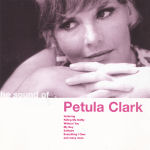
The Sound Of ...
2001
|
|
|
In 1998,
Rebound Records in the U.S. issued The Wedding Song, an 11-track CD drawing material from the Polydor albums
Now, Come On Home, and Live in London.
And in 2001, Spectrum (U.K.) released a 16-track compilation titled The Sound of Petula Clark, featuring selections from
Now, Come On Home, and I'm The Woman You
Need.
Both discs remain easy to find on reputable resale sites such as Discogs and eBay, and they offer an accessible, affordable way for listeners to acquaint themselves with key recordings from this period, especially given how expensive the original albums are on CD.
These compilations may not be comprehensive, but they provide a well-curated introduction to Petula's
mid-'70s Polydor output and remain valuable stepping-stones for collectors building their way toward the
harder-to-find, more expensive releases.
The
Essential Polydor Companion
|

Open Your Heart
2009
|
|
|
|
To round out the Polydor-era listening experience, the 2009
Collectors' Choice CD Open
Your Heart offers a valuable bonus for enthusiasts. This
release gathers a selection of previously unreleased material,
including an alternate edit, an extended version, a never-issued
extended mix, a previously unheard alternate mix, and several
single-specific cuts. For collectors, it remains an essential
companion piece, the only release to bring these variations
together in one place, and a rare opportunity to hear how the
sessions evolved beyond original Polydor album configurations.

From the Fan Archive
Collection: printed materials from a Polydor (U.K.) press pack
dated April 1975
Taken
together, Petula's Polydor recordings reveal a remarkable
chapter in her career, a period defined by bold artistry,
sophisticated production, and some of the finest vocal work she
ever committed to record. For collectors and listeners alike,
these years remain one of the most rewarding eras to explore.
Team Fan Archive hopes this page brings you added enjoyment and a
deeper appreciation and an insight to these exceptional
recordings, shining a little more light on a truly magnificent
phase of Petula's recording career.

Questions?
Drop us an email: info@petula-archives.co.uk